
VIVA CUBA BEISBOL -- A BOOK PROPOSAL BY BYRON MOTLEY
For over 40 years Cuba, in many respects, has been isolated from the modern world while trying to live the socialist dream. The world has changed and so has Cuba (but has it? In some ways, yes, but in some ways it is still stuck in a 1950’s time warp). Given the precarious times we live in, the uncertainty of our relationships with other countries, and the absolute need to encourage understanding and respect for our neighbors, both large and small, now more than ever is the time to explore this country, this lone island, that has so much allure, beauty, mystique and controversy. Regardless of our political beliefs, the differences in governance, or the chasm between cultures, through the decades there has been one common love that we share with our Cuban neighbors. Baseball. Baseball has become Cuba’s unchallenged National Pastime and most beloved sport. The phenomenon of baseball on the island is unto a world of it own and one that has yet to be fully explored visually through the world of photography.
OVERVIEW:
Viva Cuba Béisbol will be the first photojournalistic essay coffee table book specifically devoted to capturing the current day spirit of baseball in Cuba. With photography and text from Cuban cultural enthusiast and baseball aficionado Byron Motley, Viva Cuba Béisbol will depict all levels of Cuban baseball as seen through the lens of Byron Motley.
The game of baseball is revered by Cuba’s approximately 12,000,000 (twelve million) residents in a way that borders on fanaticism. Even those who don’t follow the sport on a daily basis are still emboldened by the prideful nationalism which the game evokes throughout the country. From the hustle, bustle streets of Havana to more rural settings in towns like Cienfuegos and Holguin, Cubans embrace the sport of baseball even more than the universal sport of soccer. Baseball is a true cultural phenomenon. Kids of all ages play baseball everywhere from street corners, apartment buildings, parks, alleyways, and every nook and cranny that can provide the faintest semblance of a baseball diamond.
Because of Cuba’s perpetual lack of material goods, the country’s children and young adults creatively make do with anything on hand to play the sport they so love. Bottle caps become baseballs. Broom sticks become bats. Flattened cardboard boxes become bases. Nothing can stop them from playing.
As simplistic as street baseball can be, the professional Cuban baseball league is top notch and possesses some of the finest rated players in the world. As a matter of fact, one could even argue that the success of the 2006 Cuban World Baseball Classic team placed international baseball in the spotlight. It can no longer be claimed that the United States’ World Series represents baseball at its best.
Attending a professional Cuban baseball game is like going to an impromptu rock concert. The packed stadiums, although not nearly as stately or as modern as America’s, are well maintained and durable. Fans chant, sing, and play percussive instruments from the first pitch until the end of the game. Unlike sporting events in America, no one leaves until the last out has been made. Meanwhile the teams on the field play hard fought competitions with zest, passion, enthusiasm and incredible athleticism. Many players are major league caliber athletes who may never get a chance at big stage or big money while the U.S enforced embargo deeply impairs the country. There are 16 national teams (divided into four divisions) with a season that spans all but two months out of the year. Yes in Cuba, baseball is king!
This rich treasury of unpublished photographs and insightful text from photographer/author Byron Motley, together with narratives from some of the premiere historians of Cuban baseball including Michael Lewis, Peter Bjarkman, Eric Enders, Larry Hogan, Jules Tygiel, Larry Lester, Kit Krieger, Dr. Adrian Burgos and others, make Viva Cuba Béisbol a unique art book with strong appeal to visual creatives, sport lovers, travel enthusiasts, and anyone with a fascination and appreciation of Latin-American culture. The book will also slightly reflect on other aspects of Cuban culture such as religion, art, music and dance and how each entity is reflected in the countries passion for baseball. The book will make an evocative gift and historical companion piece.
Supported by high level Cuban entities including the Cuban Ministry of Culture, INDER (Instituto Nacional de Deportes, Educaion, Fiaica y Recreacion), and the International Press Center in Havana (where Viva Cuba Béisbol will be presented in a photo exhibit in the Spring of 2009), Byron Motley is being granted unprecedented access to an American journalist which will give Viva Cuba Béisbol an exclusive, “behind the scenes” look into the professional major league level baseball in Cuba as well.
Combinations of color and b/w photography will ad a unique perspective to the many moods that the island scenes of baseball evoke. Images of various sizes will be utilized throughout the book depending on image and text on a specific page. Some images may also be digitally enhanced to enhance a particular mood or setting of a photograph. However, the natural shot will be the predominant theme of the images throughout. All photos will be shot using a variety of cameras including digital, 35mm film and medium range 6x4 format.
Several prominent individuals, some with whom the author has a relationship and others that will be approached to provide the Foreword for Viva Cuba Béisbol. Others will be asked to endorse and help promote the book. With suggestions from the publisher, the author can approach any of the following individuals:
• Walter Cronkite, retired journalist
• Fay Vincent, Former Commissioner of Baseball
• Orlando Hernandez, Major League player (Former Cuban national player)
• Gil Garcetti, Former Los Angeles District Attorney, photographer and Cuban
cultural authority
• Luis Tiant, Former Major League Baseball player of Cuban descent
• Minnie Minoso, Former Major League Baseball player of Cuban descent
Postscript: Two (2) of Mr. Motley’s photographs to be featured in Viva Cuba Béisbol, will be published in the July 2008 issue of Vanity Fair Magazine in an article on Cuban baseball written by Michael Lewis (Moneyball: The Art of Winning an Unfair Game).
***Because the author is fully employed by his own production company (YABBA BIRI Productions, Inc.), he can freely travel to Cuba under the guidelines of the General License as determined by the United States Treasury Department.
The game of baseball is revered by Cuba’s approximately 12,000,000 (twelve million) residents in a way that borders on fanaticism. Even those who don’t follow the sport on a daily basis are still emboldened by the prideful nationalism which the game evokes throughout the country. From the hustle, bustle streets of Havana to more rural settings in towns like Cienfuegos and Holguin, Cubans embrace the sport of baseball even more than the universal sport of soccer. Baseball is a true cultural phenomenon. Kids of all ages play baseball everywhere from street corners, apartment buildings, parks, alleyways, and every nook and cranny that can provide the faintest semblance of a baseball diamond.
Because of Cuba’s perpetual lack of material goods, the country’s children and young adults creatively make do with anything on hand to play the sport they so love. Bottle caps become baseballs. Broom sticks become bats. Flattened cardboard boxes become bases. Nothing can stop them from playing.
As simplistic as street baseball can be, the professional Cuban baseball league is top notch and possesses some of the finest rated players in the world. As a matter of fact, one could even argue that the success of the 2006 Cuban World Baseball Classic team placed international baseball in the spotlight. It can no longer be claimed that the United States’ World Series represents baseball at its best.
Attending a professional Cuban baseball game is like going to an impromptu rock concert. The packed stadiums, although not nearly as stately or as modern as America’s, are well maintained and durable. Fans chant, sing, and play percussive instruments from the first pitch until the end of the game. Unlike sporting events in America, no one leaves until the last out has been made. Meanwhile the teams on the field play hard fought competitions with zest, passion, enthusiasm and incredible athleticism. Many players are major league caliber athletes who may never get a chance at big stage or big money while the U.S enforced embargo deeply impairs the country. There are 16 national teams (divided into four divisions) with a season that spans all but two months out of the year. Yes in Cuba, baseball is king!
This rich treasury of unpublished photographs and insightful text from photographer/author Byron Motley, together with narratives from some of the premiere historians of Cuban baseball including Michael Lewis, Peter Bjarkman, Eric Enders, Larry Hogan, Jules Tygiel, Larry Lester, Kit Krieger, Dr. Adrian Burgos and others, make Viva Cuba Béisbol a unique art book with strong appeal to visual creatives, sport lovers, travel enthusiasts, and anyone with a fascination and appreciation of Latin-American culture. The book will also slightly reflect on other aspects of Cuban culture such as religion, art, music and dance and how each entity is reflected in the countries passion for baseball. The book will make an evocative gift and historical companion piece.
Supported by high level Cuban entities including the Cuban Ministry of Culture, INDER (Instituto Nacional de Deportes, Educaion, Fiaica y Recreacion), and the International Press Center in Havana (where Viva Cuba Béisbol will be presented in a photo exhibit in the Spring of 2009), Byron Motley is being granted unprecedented access to an American journalist which will give Viva Cuba Béisbol an exclusive, “behind the scenes” look into the professional major league level baseball in Cuba as well.
Combinations of color and b/w photography will ad a unique perspective to the many moods that the island scenes of baseball evoke. Images of various sizes will be utilized throughout the book depending on image and text on a specific page. Some images may also be digitally enhanced to enhance a particular mood or setting of a photograph. However, the natural shot will be the predominant theme of the images throughout. All photos will be shot using a variety of cameras including digital, 35mm film and medium range 6x4 format.
Several prominent individuals, some with whom the author has a relationship and others that will be approached to provide the Foreword for Viva Cuba Béisbol. Others will be asked to endorse and help promote the book. With suggestions from the publisher, the author can approach any of the following individuals:
• Walter Cronkite, retired journalist
• Fay Vincent, Former Commissioner of Baseball
• Orlando Hernandez, Major League player (Former Cuban national player)
• Gil Garcetti, Former Los Angeles District Attorney, photographer and Cuban
cultural authority
• Luis Tiant, Former Major League Baseball player of Cuban descent
• Minnie Minoso, Former Major League Baseball player of Cuban descent
Postscript: Two (2) of Mr. Motley’s photographs to be featured in Viva Cuba Béisbol, will be published in the July 2008 issue of Vanity Fair Magazine in an article on Cuban baseball written by Michael Lewis (Moneyball: The Art of Winning an Unfair Game).
***Because the author is fully employed by his own production company (YABBA BIRI Productions, Inc.), he can freely travel to Cuba under the guidelines of the General License as determined by the United States Treasury Department.
ABOUT ME:
- ---------------------------------------
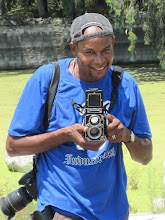
- As a photographer, Byron’s work has shown in galleries, boutiques and museums in the United States as well as Europe. His exhibit “Viva Cuba Beisbol: A Photographic Journey into the heart and soul of Cuban Baseball” recently enjoyed a six-month gallery exhibit at the National Baseball Hall of Fame in Cooperstown, NY. His photographs have also appeared in Vanity Fair, The Advocate, USA Today and 3Sixty magazines. A 2011 calendar entitled "The Boys of Summer" featuring Byron's photography will soon be available. With diverse interests and talents, Byron is currently producing a television documentary about the historic Negro Baseball Leagues in partnership with acclaimed producer/director Penny Marshall. An accomplished singer/songwriter, Byron has performed and recorded with such luminaries as Natalie Cole, Dionne Warwick, Celine Dion, Barbra Streisand, Melissa Ethridge, and Barry Manilow. www.ByronMotley.com
WHY I AM WRITING AND COMPILING THIS BOOK
Everything about Cuba is fascinating to me. I love its lure, culture, people, mood, sense of survival, colors, textures, music, food and mojito’s! The content of this book is exciting for me because it marries my passions for baseball, photography and Cuba.
From tales of the bygone era of Mafia influenced casinos, drugs, prostitution and other worldly vices, to the Bay of Pigs conflict and Fidel Castro’s communistic strong hold on the country, Cuban history is truly unique and rich. I have always been captivated by Cuba, especially since discovering that I was conceived there while my parents made a pre-Castro visit in the fall of 1958. Feeling “spiritually connected” to its people, customs and lifestyle has inspired me to study and capture images that depict the true spirit – rarely seen by American eyes -- of baseball in Cuba.
After years of being completely unaware that I could travel to Cuba, I finally made my first trek to the island in March of 2005 with a baseball research group from Canada (“Cuba Ball”). Since then I have traveled to Cuba three times over the past twenty months (even performing at the 2005 Havana Jazz Festival as a singer) and I look forward to many more visits.
In a very short time, I have met many influential Cubans who have and will continue to help facilitate introductions to additional contacts and photographic subjects. One of my closest colleagues is 94 year old Connie Marrero who is Cuba's reigning elder statesman of baseball. Marrero played briefly in the majors leagues with the Washington Senators after many years in Latin baseball. Other important contacts are:
• Pedro Monzon (Executive Director of the Cuban Ministry of Culture)
• Carolina Sanchez (Deputy, Cuban Ministry of Culture)
• Olga Lopez Rodriguez (INDER (Instituto Nacional de Deportes,
Educaion, Fiaica y Recreacion)
• Raul Gonzalez (Director, International Press Center - Havana)
• Anita Snow (Director, Associated Press – Havana)
• Martin Dihigo, Jr. (son of the Hall of Famer Martin Dihigo, Sr.)
• Rolando Sanchez (Cuban baseball memorabilia collector)
• Manuel Yepe and Eddy Martin (Cuban Movement for Peace – MOVPAZ)
• Dr. Rodrigo Alvarez Cambras (personal physician to Fidel Castro)
The aforementioned and others, continue to provide me with unique access to current professional Cuban players, stadiums, and other Cuban sports dignitaries.
Based on museum records, personal interviews and Cuba’s own dusty archives, the research material will mix history with present-day impressions and details of personal observations. The provided text will prove to be evocative, absorbing and richly entertaining.
According to news anchor Matt Lauer on the June 7, 2007 airing of the “Today Show” during his brief visit to Cuba, he stated that the most passionate pastimes of the people of Cuba are “baseball, boxing and ballet. And, in that order!” Viva Cuba Béisbol will be the beginning of a journey, giving readers an inside glimpse into the wonderful and magical world of this alluring island.
Because of its long Communist stance, which makes it more of an enigma to other Western cultures, particularly America, and because the succession of leadership after Fidel Castro passes away is unclear, it is important to capture the essence of this country sooner as opposed to later. Unfortunately, it is possible the country will dramatically change when he is gone. Viva Cuba Béisbol is a chance for me to give my point of view about the oft-misled biases that many Americans have toward this island and its people.
With the success of the Viva Cuba Béisbol collection, it is my intent to make it the first in a series of Latin-American baseball and soccer (futbol) photojournalist essay books with follow up editions to focus on other Latin countries including Santa Domingo, Venezuela, Mexico, Puerto Rico, Panama etc... Cuba is the most timely and essential in this series on which to capitalize while Fidel Castro is still in power. His regime has dramatically affected the history of baseball in Cuba.
From tales of the bygone era of Mafia influenced casinos, drugs, prostitution and other worldly vices, to the Bay of Pigs conflict and Fidel Castro’s communistic strong hold on the country, Cuban history is truly unique and rich. I have always been captivated by Cuba, especially since discovering that I was conceived there while my parents made a pre-Castro visit in the fall of 1958. Feeling “spiritually connected” to its people, customs and lifestyle has inspired me to study and capture images that depict the true spirit – rarely seen by American eyes -- of baseball in Cuba.
After years of being completely unaware that I could travel to Cuba, I finally made my first trek to the island in March of 2005 with a baseball research group from Canada (“Cuba Ball”). Since then I have traveled to Cuba three times over the past twenty months (even performing at the 2005 Havana Jazz Festival as a singer) and I look forward to many more visits.
In a very short time, I have met many influential Cubans who have and will continue to help facilitate introductions to additional contacts and photographic subjects. One of my closest colleagues is 94 year old Connie Marrero who is Cuba's reigning elder statesman of baseball. Marrero played briefly in the majors leagues with the Washington Senators after many years in Latin baseball. Other important contacts are:
• Pedro Monzon (Executive Director of the Cuban Ministry of Culture)
• Carolina Sanchez (Deputy, Cuban Ministry of Culture)
• Olga Lopez Rodriguez (INDER (Instituto Nacional de Deportes,
Educaion, Fiaica y Recreacion)
• Raul Gonzalez (Director, International Press Center - Havana)
• Anita Snow (Director, Associated Press – Havana)
• Martin Dihigo, Jr. (son of the Hall of Famer Martin Dihigo, Sr.)
• Rolando Sanchez (Cuban baseball memorabilia collector)
• Manuel Yepe and Eddy Martin (Cuban Movement for Peace – MOVPAZ)
• Dr. Rodrigo Alvarez Cambras (personal physician to Fidel Castro)
The aforementioned and others, continue to provide me with unique access to current professional Cuban players, stadiums, and other Cuban sports dignitaries.
Based on museum records, personal interviews and Cuba’s own dusty archives, the research material will mix history with present-day impressions and details of personal observations. The provided text will prove to be evocative, absorbing and richly entertaining.
According to news anchor Matt Lauer on the June 7, 2007 airing of the “Today Show” during his brief visit to Cuba, he stated that the most passionate pastimes of the people of Cuba are “baseball, boxing and ballet. And, in that order!” Viva Cuba Béisbol will be the beginning of a journey, giving readers an inside glimpse into the wonderful and magical world of this alluring island.
Because of its long Communist stance, which makes it more of an enigma to other Western cultures, particularly America, and because the succession of leadership after Fidel Castro passes away is unclear, it is important to capture the essence of this country sooner as opposed to later. Unfortunately, it is possible the country will dramatically change when he is gone. Viva Cuba Béisbol is a chance for me to give my point of view about the oft-misled biases that many Americans have toward this island and its people.
With the success of the Viva Cuba Béisbol collection, it is my intent to make it the first in a series of Latin-American baseball and soccer (futbol) photojournalist essay books with follow up editions to focus on other Latin countries including Santa Domingo, Venezuela, Mexico, Puerto Rico, Panama etc... Cuba is the most timely and essential in this series on which to capitalize while Fidel Castro is still in power. His regime has dramatically affected the history of baseball in Cuba.
WHO WILL BUY THIS BOOK
The intended audiences for Viva Cuba Béisbol are sports (primarily baseball) enthusiasts, and those with sports history and Latin-American interest. However, historians, artists, photographers and other curiosity seekers will also find great delight in this book. Travel buffs with a sense of adventure and discovery will also find this collection as a useful tool for future travels to Cuba or just the fantasy of wishing to travel there.
Because baseball is an international sports and the fact that citizens of every other country except America can travel freely to Cuba, Viva Cuba Béisbol has a unique worldwide appeal.
This photojournalist volume will captivate everyone from armchair travelers to baseball connoisseurs with powerful imagery that reflects the beguiling other-worldly charm of Cuba, the Caribbean’s most compelling, mysterious and intriguing isle.
Because baseball is an international sports and the fact that citizens of every other country except America can travel freely to Cuba, Viva Cuba Béisbol has a unique worldwide appeal.
This photojournalist volume will captivate everyone from armchair travelers to baseball connoisseurs with powerful imagery that reflects the beguiling other-worldly charm of Cuba, the Caribbean’s most compelling, mysterious and intriguing isle.
COMPETING AND COMPLEMENTING BOOKS:
This is a one-of-kind book. Although several photo books have been published about Cuba, never has a photojournalistic essay book specially focusing primarily on baseball been compiled.
Other notable photojournalistic essay books on Cuba and Cuban and Latin themed baseball are:
Home Is Everything: The Latino Baseball Story: From the Barrio to the Major Leagues - Marcos Breton (Author), Jose Luis Villegas (Photographer), Orlando Cepeda (Foreword) - Cinco Puntos Press
Smoke: The Romance and Lore of Cuban Baseball – Mark Rucker and Peter C. Bjarkman with Foreword by Hank Aaron – Total Sports Illustrated, 1999.
Dance In Cuba – Gil Garcetti - Princeton Architectural Press, 2007
Inside Cuba - Julio Cesar Perez Hernandez (Author), Giani Bosso (Photography) – Taschen, 2006
Cuba: Portrait of an Island - Ron Base and Donald Nausbaum – Interlink Books, 2004
Cuba – Photographs by Jack Kenny – Corazon Press, 2005
Other notable photojournalistic essay books on Cuba and Cuban and Latin themed baseball are:
Home Is Everything: The Latino Baseball Story: From the Barrio to the Major Leagues - Marcos Breton (Author), Jose Luis Villegas (Photographer), Orlando Cepeda (Foreword) - Cinco Puntos Press
Smoke: The Romance and Lore of Cuban Baseball – Mark Rucker and Peter C. Bjarkman with Foreword by Hank Aaron – Total Sports Illustrated, 1999.
Dance In Cuba – Gil Garcetti - Princeton Architectural Press, 2007
Inside Cuba - Julio Cesar Perez Hernandez (Author), Giani Bosso (Photography) – Taschen, 2006
Cuba: Portrait of an Island - Ron Base and Donald Nausbaum – Interlink Books, 2004
Cuba – Photographs by Jack Kenny – Corazon Press, 2005
MARKETABILITY AND PROMOTION:
In order to ensure the success of this book in a competitive market, I am committed to making significant efforts toward its promotion. My program will involve both traditional methods of publicity as well as reaching out to specific markets for which this book will have special appeal.
There are several special interest groups that will be targeted with our marketing efforts, including museums, stadiums, libraries and other facilities will be photo exhibits in conjunction with the release of this book.
With the influx of Latin American players now in the major leagues (and my relationship and connections to some of them) this collection would be very timely and might even receive support from some of those players.
There will be extensive promotional campaigns established in conjunction with the upcoming television documentary that I am producing. Considering that the Latin angle of involvement in the Negro Leagues will be a major part of the documentary, a PSA announcement at the end of the production, ie. “if you want to learn more about the Negro Leagues and Cuba baseball please visit The Negro Baseball Leagues · An American Legacy documentary website”. The website will prominently feature Viva Cuba Béisbol as a companion piece to the documentary and contain information on how books can be purchased on-line as well as other outlets.
Byron Motley frequently lectures at colleges and universities about the Negro Leagues (average of twenty lectures a year). There is a tremendous opportunity to include book signings at bookstores, stadiums and other venues during his lecture tours. The average college lecture usually draws upwards of 150 students, faculty, staff and community members. Once the documentary is completed the numbers of individuals who attend lectures and performances will surely increase due to the visibility of the documentary.
To assist with publicizing events in connection with Viva Cuba Béisbol, the authors will retain publicist Maureen Legg of Leggwork Communications, whom Byron Motley has worked with on publicity for previous performances & lectures.
There are several special interest groups that will be targeted with our marketing efforts, including museums, stadiums, libraries and other facilities will be photo exhibits in conjunction with the release of this book.
With the influx of Latin American players now in the major leagues (and my relationship and connections to some of them) this collection would be very timely and might even receive support from some of those players.
There will be extensive promotional campaigns established in conjunction with the upcoming television documentary that I am producing. Considering that the Latin angle of involvement in the Negro Leagues will be a major part of the documentary, a PSA announcement at the end of the production, ie. “if you want to learn more about the Negro Leagues and Cuba baseball please visit The Negro Baseball Leagues · An American Legacy documentary website”. The website will prominently feature Viva Cuba Béisbol as a companion piece to the documentary and contain information on how books can be purchased on-line as well as other outlets.
Byron Motley frequently lectures at colleges and universities about the Negro Leagues (average of twenty lectures a year). There is a tremendous opportunity to include book signings at bookstores, stadiums and other venues during his lecture tours. The average college lecture usually draws upwards of 150 students, faculty, staff and community members. Once the documentary is completed the numbers of individuals who attend lectures and performances will surely increase due to the visibility of the documentary.
To assist with publicizing events in connection with Viva Cuba Béisbol, the authors will retain publicist Maureen Legg of Leggwork Communications, whom Byron Motley has worked with on publicity for previous performances & lectures.
TIMING:
Viva Cuba Béisbol will be completed within twelve months from signing a contract with the publisher.
SAMPLE PHOTOS:
Please visit to view Byron Motley Cuba Baseball Photos:
http://vivacubabeisbol.blogspot.com/ and -- or www.ByronMotley.com
http://vivacubabeisbol.blogspot.com/ and -- or www.ByronMotley.com
SAMPLE NARRATIVE:
Written by Eric Enders
Imagine a world where baseball is played just for the fun of it. A place where world-class players walk or ride their bikes to the ballpark, and know the fans by their first names. A place where some of the best baseball in the world is played, with no luxury boxes, no owners, no MasterCard commercials and, above all, no labor conflicts.
Such a place exists in Cuba, only 90 miles off the U.S. coast, where many of the world’s best players play baseball not for money or fame, but for love of their country and the game itself. It is a place where baseball has been played for nearly 150 years, and where the great ballgames of years past still inhabit the country’s collective memory. It has played host to Babe Ruth and Satchel Paige and Cal Ripken, and has also produced the likes of Martín Dihigo and Omar Linares, equally great players whose feats are little-known outside of this 720-mile long island.
The best place in Cuba to discuss baseball is the esquina caliente, or hot corner, located in a Havana park just across the street from the capitol building. There, under a statue of national patriarch José Martí, dozens of men congregate daily to argue about both Cuban and American baseball. Some are members of the Peña, a national association of diehard baseball fans, but most are simply casual fans coming and going as the day unfolds. Many have followed baseball since before the Revolution, when players like Josh Gibson and Babe Ruth spent their off-seasons playing winter ball on the island. Among these elder statesmen is Marcelo Sánchez, one of four Cuban members of the Society for
American Baseball Research, who proudly displays his SABR membership card for anyone who asks. On this day, he is arguing with a fellow fan about whether Dizzy Dean or Sandy Koufax was a better pitcher. They are shouting in order to
hear each other over the dozens of other animated baseball conversations taking place. “Fue loco” – he was crazy – Sánchez says of Dean, and that ends this particular argument. Koufax wins. Sánchez now moves on to the next issue at hand, this time speculating on how Orestes Kindelán, the Cuban league’s lifetime home run leader, might fare in the major leagues. This and a dozen other frantic conversations continue past sundown, a surreal symphony of shouting about the national game.
Baseball is virtually the only aspect of U.S. culture embraced by the Cuban Revolution, an enterprise based largely on resisting American imperialism. While the sport has long been an indispensable part of both cultures, its meaning in
Cuba has changed profoundly since the onset of Fidel Castro’s government. ommunist ideals dictate that many of the aspects most Americans find distasteful about baseball – agents, high salaries, labor conflicts, team owners,
and, above all, greed – no longer exist in Cuban baseball. The ballparks are named after national heroes, not multinational corporations. To Cubans, baseball is not a business. It is a passion, and it is run by the government not as a money-
making enterprise, but as a public service.
Things have not always been this way, of course. Before the 1959 Revolution, a thriving professional winter league played host to major league players looking for good times, warm weather, and a little extra income. Because it was integrated long before the majors, the Cuban league also attracted Negro Leaguers trying to escape the racism of the United States. Cuban baseball in its current form began in 1962, when the government disbanded the professional league. In a Communist society professional sports represented, as one magazine put it, “a form of the exploitation of man by man: Athletes were sold and traded like simple merchandise.” Taking the place of professionalism was a purely amateur league, called the National Series, which increased the number of teams and took baseball to the rural provinces that had previously been neglected. There are now 16 teams in the National Series: one from each Cuban province, plus two more representing the city of Havana.
Like early baseball in the United States, the teams truly represent their regions: each player plays for his home province, cheered on from the stands by friends and family. There are no trades, no free agents, and, unless a player
changes his residency, no movement from team to team. Because even the best players are not treated much differently than the average citizen, they seem more accessible and down-to-earth than American professionals. Cuban players banter with the fans, many ride their bicycles to the ballpark and, if they’re lucky, they might return home at night carrying a plucked chicken or two as a reward for a good game.
Sigfredo Barros is the owner of one of the best jobs in Cuba. He is the baseball writer for Granma, the national newspaper. Every night he attends whatever game is taking place at Havana’s massive Estadio Latinoamericano,
while phone reports from other provinces trickle in throughout the evening. At the end of the night he condenses everything into one comprehensive story, which must be brief because, with a severe paper shortage in Cuba, most issues of Granma are limited to eight pages. In the last several years his job has taken him many places, including Atlanta for the 1996 Olympics and Baltimore for the 1999
Orioles game against the Cuban national team. He has never thought of defecting because he loves his job, and his country, too much. “I love baseball,” he says. “I love baseball. When I was a child, the first thing my father gave me was a bat and a ball. I was never very good as a player, but I have always loved the game.”
At Nelson Fernández Stadium, named for a hero of the Bay of Pigs invasion, baseball fields and playgrounds surround the concrete stadium, as youngsters practice the skills they’ll need to make it to the National Series. Before entering the ballpark, I play catch for half an hour with a 12-year-old boy named Yuriel, who is borrowing a glove from a friend. He throws well, and he says his dream is to make the Olympic Team in a few years. As it happens, this stadium in rural Havana province is also the site of one of Cuba’s elite baseball academies, where students spend their mornings perfecting reading and writing skills, and their afternoons learning how to hit the cutoff man. Talented youngsters are
identified at an early age, and the most promising are enrolled in this academy by the time they are 17. A few years later, with luck, they might join one of the Cuban league teams or, even better, the Olympic squad.
In Pinar del Río, the rural province where most of the country’s tobacco is grown, residents roll the famous Cuban cigars during the day and follow the fortunes of their beloved baseball team at night. A perennial power in the Cuban
league, the Pinar team features Omar Linares, the foremost player in the history of international baseball, and Yosvany Peraza, a powerful young catcher whose body and bat resemble Roy Campanella’s. The star of Cuba’s powerhouse
Olympic squad for more than a decade, Linares is a genuinely great player who is probably, along with the likes of Mike Schmidt and George Brett, one of the best half-dozen third basemen in baseball history. Using an aluminum bat for most of his Cuban league career, he has posted a lifetime .366 batting average, and is approaching 400 home runs despite the league’s short seasons. He is no longer the player he once was, but the 34-year-old Linares still managed to hit a Brett-like .390 this season, his 18th year in the league.
Like many of his countrymen, Linares is somewhat suspicious of foreigners. Often the only Americans the Cuban players have ever met are agents or scouts trying to convince them to defect. Though Linares has had countless
opportunities to turn pro, he has resisted the temptation of major league riches because, he says, he finds playing for his country more rewarding. In fact, many Cubans understandably take offense at the suggestion that their players are missing out on something by not playing in the major leagues. American fans may find it hard to accept the notion that there are top-flight baseball players in the world who don’t aspire to the major leagues, but for every Orlando Hernández who flees Cuba for the majors, there are many more like Linares who have turned down the opportunity to defect in order to play at home.
Two elderly men in center field have seen every home game Linares has ever played, though they have never bought a ticket. Rolando Castillo and Julio Hernández are Pinar del Río’s pizarristas, or scoreboard operators, and together they have been controlling the manually operated scoreboard at Capitán San Luis Stadium for 35 years. Like Quasimodo in his bell tower, they sit in the dark at the top of a massive, empty structure, peering out at the bright world around them. Inhabiting the third floor of the hulking, dusty scoreboard, they watch the game through holes in the wood while a radio beside them crackles with the play-by-
play in case they miss something. Hernández handles the line score, while Castillo maintains the balls and strikes. At each turn of events they crank a heavy steel handle that rotates the proper numeral into place. Like an old married
couple, each knows the other’s movements like clockwork, and despite the monotony and loneliness of the work, there is nothing else on earth they would rather be doing. Their biggest fear is the electronic scoreboard, which they know
already exists at many Cuban stadiums. Although they do not know when it will arrive, they know that, sooner or later, newer technology will push them out of their jobs. “It is a curse upon us,” Castillo says, staring wistfully into the distance.
On a sunny Havana street, a few yards away from the crashing waves of the Caribbean, a dozen youngsters play a stickball game called cuatras esquinas (four corners). The ball is a rock wrapped in white medical tape, about half the
size of a regulation baseball. The bat is a tree branch; there are no gloves. There’s also no baserunning – either you hit the ball over everyone’s head, or you’re out. If a car speeds by, play stops while the fielders scurry for the safety of the
sidewalk. Such pickup games can be found on virtually every street corner in the island. This is where boys hone their batting skills in hope that they will eventually be chosen for one of the prestigious baseball academies, then maybe
the National Series, and perhaps eventually, the Olympics. Most of them know they will never make it that far, but it doesn’t bother them. They are busy enjoying themselves, catching and running and hitting, with the sea breeze
blowing through their hair and the afternoon sun warming their shoulders. What could be better?
Imagine a world where baseball is played just for the fun of it. A place where world-class players walk or ride their bikes to the ballpark, and know the fans by their first names. A place where some of the best baseball in the world is played, with no luxury boxes, no owners, no MasterCard commercials and, above all, no labor conflicts.
Such a place exists in Cuba, only 90 miles off the U.S. coast, where many of the world’s best players play baseball not for money or fame, but for love of their country and the game itself. It is a place where baseball has been played for nearly 150 years, and where the great ballgames of years past still inhabit the country’s collective memory. It has played host to Babe Ruth and Satchel Paige and Cal Ripken, and has also produced the likes of Martín Dihigo and Omar Linares, equally great players whose feats are little-known outside of this 720-mile long island.
The best place in Cuba to discuss baseball is the esquina caliente, or hot corner, located in a Havana park just across the street from the capitol building. There, under a statue of national patriarch José Martí, dozens of men congregate daily to argue about both Cuban and American baseball. Some are members of the Peña, a national association of diehard baseball fans, but most are simply casual fans coming and going as the day unfolds. Many have followed baseball since before the Revolution, when players like Josh Gibson and Babe Ruth spent their off-seasons playing winter ball on the island. Among these elder statesmen is Marcelo Sánchez, one of four Cuban members of the Society for
American Baseball Research, who proudly displays his SABR membership card for anyone who asks. On this day, he is arguing with a fellow fan about whether Dizzy Dean or Sandy Koufax was a better pitcher. They are shouting in order to
hear each other over the dozens of other animated baseball conversations taking place. “Fue loco” – he was crazy – Sánchez says of Dean, and that ends this particular argument. Koufax wins. Sánchez now moves on to the next issue at hand, this time speculating on how Orestes Kindelán, the Cuban league’s lifetime home run leader, might fare in the major leagues. This and a dozen other frantic conversations continue past sundown, a surreal symphony of shouting about the national game.
Baseball is virtually the only aspect of U.S. culture embraced by the Cuban Revolution, an enterprise based largely on resisting American imperialism. While the sport has long been an indispensable part of both cultures, its meaning in
Cuba has changed profoundly since the onset of Fidel Castro’s government. ommunist ideals dictate that many of the aspects most Americans find distasteful about baseball – agents, high salaries, labor conflicts, team owners,
and, above all, greed – no longer exist in Cuban baseball. The ballparks are named after national heroes, not multinational corporations. To Cubans, baseball is not a business. It is a passion, and it is run by the government not as a money-
making enterprise, but as a public service.
Things have not always been this way, of course. Before the 1959 Revolution, a thriving professional winter league played host to major league players looking for good times, warm weather, and a little extra income. Because it was integrated long before the majors, the Cuban league also attracted Negro Leaguers trying to escape the racism of the United States. Cuban baseball in its current form began in 1962, when the government disbanded the professional league. In a Communist society professional sports represented, as one magazine put it, “a form of the exploitation of man by man: Athletes were sold and traded like simple merchandise.” Taking the place of professionalism was a purely amateur league, called the National Series, which increased the number of teams and took baseball to the rural provinces that had previously been neglected. There are now 16 teams in the National Series: one from each Cuban province, plus two more representing the city of Havana.
Like early baseball in the United States, the teams truly represent their regions: each player plays for his home province, cheered on from the stands by friends and family. There are no trades, no free agents, and, unless a player
changes his residency, no movement from team to team. Because even the best players are not treated much differently than the average citizen, they seem more accessible and down-to-earth than American professionals. Cuban players banter with the fans, many ride their bicycles to the ballpark and, if they’re lucky, they might return home at night carrying a plucked chicken or two as a reward for a good game.
Sigfredo Barros is the owner of one of the best jobs in Cuba. He is the baseball writer for Granma, the national newspaper. Every night he attends whatever game is taking place at Havana’s massive Estadio Latinoamericano,
while phone reports from other provinces trickle in throughout the evening. At the end of the night he condenses everything into one comprehensive story, which must be brief because, with a severe paper shortage in Cuba, most issues of Granma are limited to eight pages. In the last several years his job has taken him many places, including Atlanta for the 1996 Olympics and Baltimore for the 1999
Orioles game against the Cuban national team. He has never thought of defecting because he loves his job, and his country, too much. “I love baseball,” he says. “I love baseball. When I was a child, the first thing my father gave me was a bat and a ball. I was never very good as a player, but I have always loved the game.”
At Nelson Fernández Stadium, named for a hero of the Bay of Pigs invasion, baseball fields and playgrounds surround the concrete stadium, as youngsters practice the skills they’ll need to make it to the National Series. Before entering the ballpark, I play catch for half an hour with a 12-year-old boy named Yuriel, who is borrowing a glove from a friend. He throws well, and he says his dream is to make the Olympic Team in a few years. As it happens, this stadium in rural Havana province is also the site of one of Cuba’s elite baseball academies, where students spend their mornings perfecting reading and writing skills, and their afternoons learning how to hit the cutoff man. Talented youngsters are
identified at an early age, and the most promising are enrolled in this academy by the time they are 17. A few years later, with luck, they might join one of the Cuban league teams or, even better, the Olympic squad.
In Pinar del Río, the rural province where most of the country’s tobacco is grown, residents roll the famous Cuban cigars during the day and follow the fortunes of their beloved baseball team at night. A perennial power in the Cuban
league, the Pinar team features Omar Linares, the foremost player in the history of international baseball, and Yosvany Peraza, a powerful young catcher whose body and bat resemble Roy Campanella’s. The star of Cuba’s powerhouse
Olympic squad for more than a decade, Linares is a genuinely great player who is probably, along with the likes of Mike Schmidt and George Brett, one of the best half-dozen third basemen in baseball history. Using an aluminum bat for most of his Cuban league career, he has posted a lifetime .366 batting average, and is approaching 400 home runs despite the league’s short seasons. He is no longer the player he once was, but the 34-year-old Linares still managed to hit a Brett-like .390 this season, his 18th year in the league.
Like many of his countrymen, Linares is somewhat suspicious of foreigners. Often the only Americans the Cuban players have ever met are agents or scouts trying to convince them to defect. Though Linares has had countless
opportunities to turn pro, he has resisted the temptation of major league riches because, he says, he finds playing for his country more rewarding. In fact, many Cubans understandably take offense at the suggestion that their players are missing out on something by not playing in the major leagues. American fans may find it hard to accept the notion that there are top-flight baseball players in the world who don’t aspire to the major leagues, but for every Orlando Hernández who flees Cuba for the majors, there are many more like Linares who have turned down the opportunity to defect in order to play at home.
Two elderly men in center field have seen every home game Linares has ever played, though they have never bought a ticket. Rolando Castillo and Julio Hernández are Pinar del Río’s pizarristas, or scoreboard operators, and together they have been controlling the manually operated scoreboard at Capitán San Luis Stadium for 35 years. Like Quasimodo in his bell tower, they sit in the dark at the top of a massive, empty structure, peering out at the bright world around them. Inhabiting the third floor of the hulking, dusty scoreboard, they watch the game through holes in the wood while a radio beside them crackles with the play-by-
play in case they miss something. Hernández handles the line score, while Castillo maintains the balls and strikes. At each turn of events they crank a heavy steel handle that rotates the proper numeral into place. Like an old married
couple, each knows the other’s movements like clockwork, and despite the monotony and loneliness of the work, there is nothing else on earth they would rather be doing. Their biggest fear is the electronic scoreboard, which they know
already exists at many Cuban stadiums. Although they do not know when it will arrive, they know that, sooner or later, newer technology will push them out of their jobs. “It is a curse upon us,” Castillo says, staring wistfully into the distance.
On a sunny Havana street, a few yards away from the crashing waves of the Caribbean, a dozen youngsters play a stickball game called cuatras esquinas (four corners). The ball is a rock wrapped in white medical tape, about half the
size of a regulation baseball. The bat is a tree branch; there are no gloves. There’s also no baserunning – either you hit the ball over everyone’s head, or you’re out. If a car speeds by, play stops while the fielders scurry for the safety of the
sidewalk. Such pickup games can be found on virtually every street corner in the island. This is where boys hone their batting skills in hope that they will eventually be chosen for one of the prestigious baseball academies, then maybe
the National Series, and perhaps eventually, the Olympics. Most of them know they will never make it that far, but it doesn’t bother them. They are busy enjoying themselves, catching and running and hitting, with the sea breeze
blowing through their hair and the afternoon sun warming their shoulders. What could be better?